Yes or No Tarot Card Meanings
Browse TarotPro’s directional yes, no, or maybe classification for every card and orientation. Each value is reflective shorthand, not a factual guarantee.
Find a card direction
Search by card name, then narrow the directory by verdict or orientation. Open only the card you want to compare.
Showing all 78 cards with both orientations.
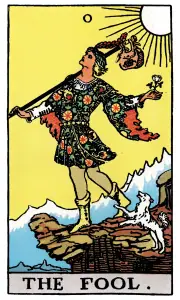 The Fool
Usually yes when the question concerns a new experience and the first step leaves room to learn, revise, or withdraw.
Not yet when essential preparation is missing, consequences are being minimized, or fear has made the question impossible to test.
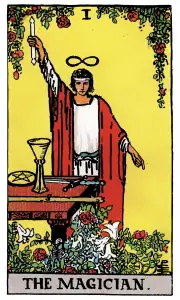 The Magician
Usually yes when the required tools are available and the question can be answered through a clear, observable action.
Only conditionally when the plan depends on persuasion, hidden information, scattered effort, or a capability that has not been demonstrated.
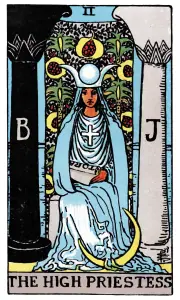 The High Priestess
Maybe; the answer depends on information that is still private, incomplete, or better understood through observation than immediate action.
Unclear for now because anxiety, secrecy, or ignored evidence makes it difficult to distinguish a reliable signal from a projection.
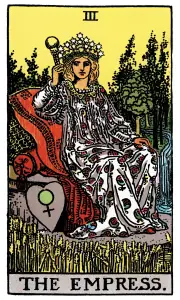 The Empress
Usually yes when the choice supports healthy development and the time, care, and resources needed for maintenance are available.
Only conditionally when overgiving, depletion, poor conditions, or unexamined consumption would make the growth difficult to sustain.
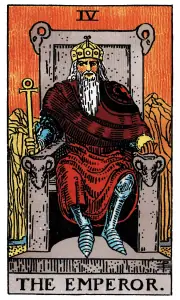 The Emperor
Usually yes when the decision has clear boundaries, accountable ownership, and a structure capable of supporting it over time.
Usually no when control, rigidity, weak governance, or missing responsibility would make the arrangement unstable or unequal.
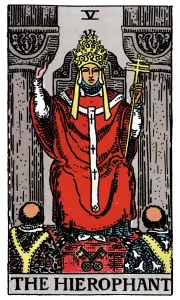 The Hierophant
Usually yes when the choice aligns with consciously shared values and a tested structure offers useful guidance or protection.
Maybe when the current rule does not fit, but a responsible alternative and an honest agreement have not yet been established.
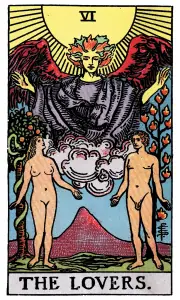 The Lovers
Usually yes when the choice is mutual, informed, and consistent with the values each person says the relationship or decision should express.
Usually no when attraction masks incompatibility, commitment is unequal, or the decision requires abandoning a stated value without acknowledging the cost.
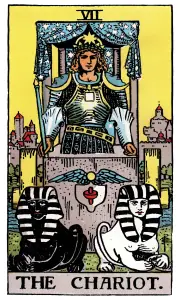 The Chariot
Usually yes when the objective is clear, the people involved share the direction, and enough discipline exists to manage competing pressures.
Usually no when speed is replacing coordination, control has been lost, or the proposed destination is not genuinely shared.
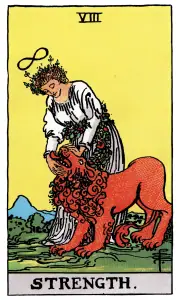 Strength
Usually yes when patience, emotional regulation, and consistent effort are more important than speed or force.
Only conditionally when confidence, capacity, or self-control needs to be restored before the situation can be handled safely.
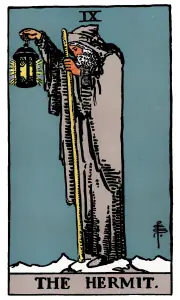 The Hermit
Maybe; more useful clarity may come from a defined period of reflection, research, or consultation before committing.
Usually no when isolation, overanalysis, or avoidance has replaced the contact and feedback needed to make a sound choice.
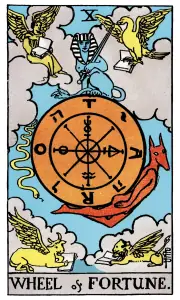 Wheel of Fortune
Usually yes when the question can benefit from changing conditions and the person is prepared to act without assuming the advantage will last.
Maybe when timing is difficult or a repeated pattern has not yet been interrupted; the answer improves after adaptation.
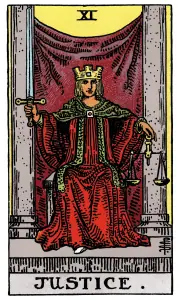 Justice
Usually yes when the relevant facts are available, the agreement is clear, and every option is being judged by the same standard.
No for now when a missing record, unequal rule, undisclosed interest, or avoided responsibility makes the proposed outcome unreliable.
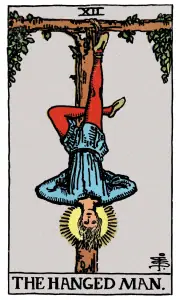 The Hanged Man
Maybe; a deliberate pause or changed perspective is likely to improve the question before a firm commitment is made.
Usually no when waiting has become avoidance, sacrifice lacks a clear purpose, or the arrangement depends on indefinite suspension.
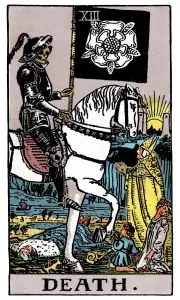 Death
Death
Usually no to continuing in the current form; the card supports closure, release, or a materially different arrangement.
No while resistance to an ending or unfinished transition work keeps the situation tied to a form that no longer functions.
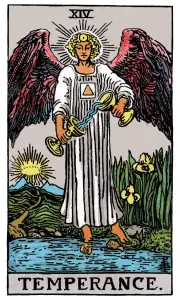 Temperance
Usually yes when the choice can be introduced gradually, integrated with existing responsibilities, and adjusted in response to evidence.
Maybe when excess, incompatibility, or unstable pacing must be corrected before the arrangement can become sustainable.
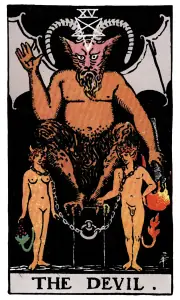 The Devil
Usually no when the choice increases dependency, hides its real cost, or relies on pressure that limits informed consent.
Maybe when the question concerns leaving or reducing a harmful attachment and a concrete support structure is being put in place.
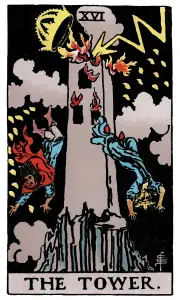 The Tower
Usually no because the current structure, assumption, or plan needs immediate reassessment before it can safely carry another commitment.
No for now when a warning is being minimized or repair remains incomplete; a contained disruption still requires structural correction.
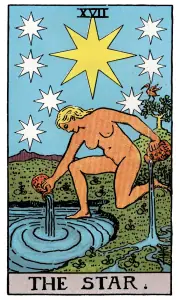 The Star
Usually yes when the choice supports honest renewal and the next step is modest enough to remain grounded in present evidence.
Maybe when discouragement or unrealistic hope is obscuring what support, time, and practical conditions the decision would require.
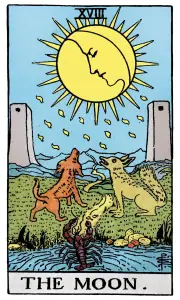 The Moon
Maybe; important facts remain unclear and emotion or projection may be affecting how the available evidence is being read.
Still conditional, although emerging information may support a firmer answer once it is verified and incorporated into the decision.
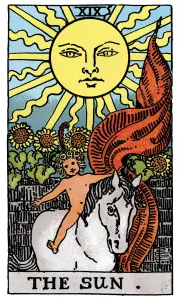 The Sun
Usually yes when the relevant facts are visible, the benefit can be stated plainly, and participation does not depend on hidden conditions.
Still often yes, but expectations, timing, or presentation may need adjustment before the positive result can be understood accurately.
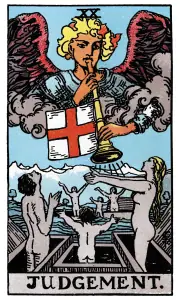 Judgement
Usually yes when the past has been reviewed honestly and the proposed action demonstrates learning, responsibility, and a clear decision.
Usually no when denial, blame, or repeated reconsideration prevents the lesson from becoming a materially different choice.
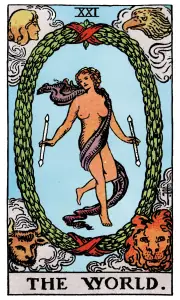 The World
Usually yes when the choice completes a coherent cycle, the final obligations are understood, and the result can be integrated into what follows.
Maybe when the outcome is close but a material loose end, missing closure, or incomplete handoff still affects the whole.
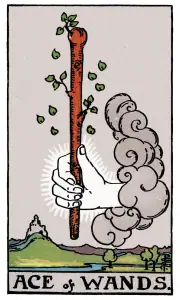 Ace of Wands
Usually yes when the question concerns beginning a creative, physical, or entrepreneurial experiment that can produce useful feedback quickly.
Not yet when the desire has no workable outlet, the available energy is depleted, or repeated starts have not been supported past the initial rush.
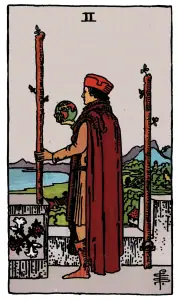 Two of Wands
Maybe, leaning yes, when the question has a credible path forward and the remaining issue is choosing and funding one direction.
Usually no for now when avoidance, insufficient research, or fear of leaving the familiar prevents a real commitment from being made.
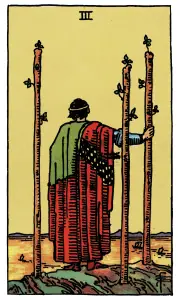 Three of Wands
Generally yes when a first commitment has been made and there is credible evidence that the plan can move through its next stage.
Not yet when delays, weak coordination, or unrealistic expansion assumptions prevent the expected response from reaching you.
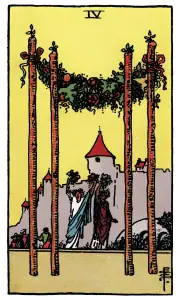 Four of Wands
Usually yes when the decision strengthens a shared foundation, marks a genuine milestone, and includes the people whose support is required.
Maybe after private instability, exclusion, or practical home and team issues are addressed beneath the desired public outcome.
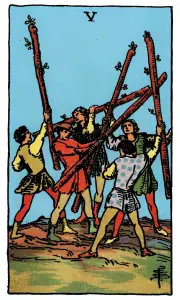 Five of Wands
Maybe; the opportunity can develop, but competing aims and unclear rules must be organized before the answer becomes dependable.
Not while necessary disagreement is being avoided or the participants are too depleted to resolve the same recurring conflict.
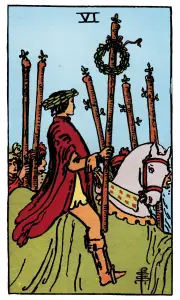 Six of Wands
Generally yes when the question concerns presenting completed work, accepting earned recognition, or moving with demonstrated support.
Maybe after the evidence, credit, and sustainability of the apparent result are checked rather than assumed from public response.
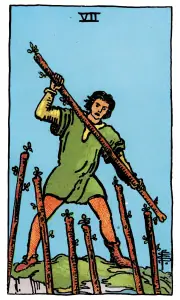 Seven of Wands
Yes, if the choice protects a justified boundary or earned position and you have the evidence and capacity to hold it selectively.
No for now when exhaustion, lack of support, or indiscriminate defensiveness makes the present position impossible to sustain responsibly.
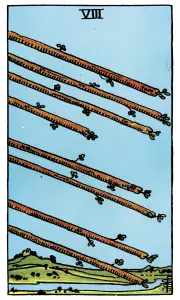 Eight of Wands
Yes when the route is clear, the message has a specific recipient, and rapid movement serves an already understood objective.
Not yet when timing, communication, or dependencies are misaligned and acting faster would only accelerate confusion.
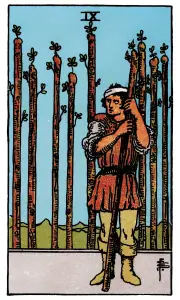 Nine of Wands
A cautious yes when the objective remains worthwhile and the remaining effort can be protected by clear limits and recovery.
No for now when fatigue, hypervigilance, or sunk-cost thinking has removed the capacity for another responsible push.
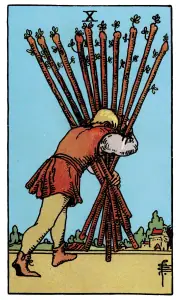 Ten of Wands
Maybe, but only if the existing load can be reduced or shared; adding another commitment under current conditions is not a clean yes.
Yes to release or renegotiation when the handoff is responsible; no to escape that simply moves the consequence onto someone else.
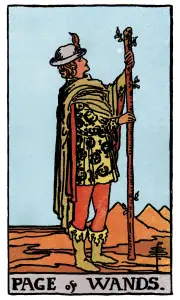 Page of Wands
Yes to exploring, asking, learning, or sending a low-pressure first message; the card supports discovery more than a final commitment.
Not yet when the plan depends on unverified news, inconsistent interest, or enthusiasm that has not survived even a small practice task.
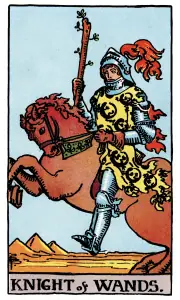 Knight of Wands
Yes when decisive movement is needed, the destination is clear, and the risk has been limited before speed is added.
No for now when impatience, poor preparation, or attraction to the chase is stronger than commitment to the result.
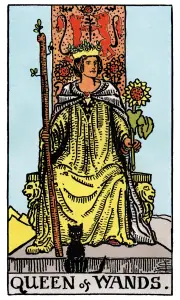 Queen of Wands
Usually yes when the choice allows confident, visible action while respecting the independence and participation of everyone involved.
Maybe after jealousy, approval-seeking, or self-doubt is separated from the actual evidence and requirements of the decision.
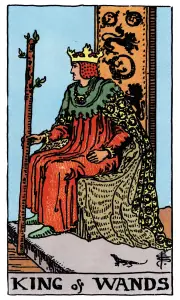 King of Wands
Yes when the objective is clear, leadership accepts accountability, and the people executing the plan have real authority and resources.
No when ego, coercion, impulsive direction changes, or unsupported promises are carrying more weight than evidence and governance.
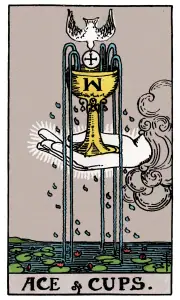 Ace of Cups
Usually yes when the question concerns an honest emotional or creative opening and there is room for the offer to be received in practice.
Not yet when feeling is withheld, depleted, or overflowing so strongly that consent, reciprocity, or a sustainable response cannot be read clearly.
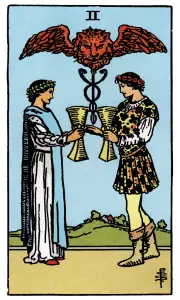 Two of Cups
Usually yes when the choice depends on a reciprocal offer, shared understanding, and both parties having equal power to consent.
No under the current terms when investment, expectations, or decision power are mismatched and the agreement has not been repaired.
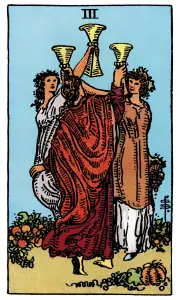 Three of Cups
Yes when trusted peers, a collaborative setting, or a truthful celebration strengthens the choice without overriding personal judgment.
No for now when gossip, exclusion, excess, or blurred group boundaries make the social environment unreliable.
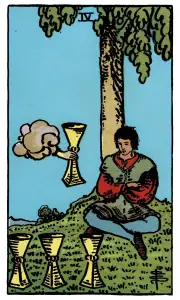 Four of Cups
Maybe; the current emotional state makes it difficult to judge whether the offer is unsuitable or simply hard to receive.
A tentative yes when recent actions show genuine re-engagement, but no when withdrawal continues to deepen despite available support.
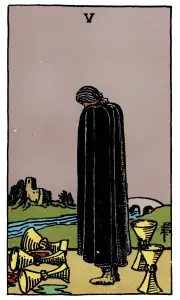 Five of Cups
Usually no under present conditions because loss and regret still dominate the decision and need to be processed accurately first.
Maybe, leaning yes, when the old loss has been accepted enough for remaining resources and current evidence to guide the choice.
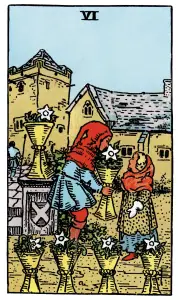 Six of Cups
Yes when a return, familiar resource, or act of kindness has current evidence behind it and does not depend only on nostalgia.
No when the choice repeats an unchanged past pattern or grants history more authority than present behavior and boundaries.
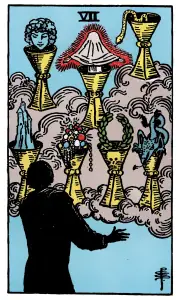 Seven of Cups
Maybe; too many untested possibilities and projections remain active for a simple answer to represent the real choice.
A conditional yes when one option has been selected through evidence and a bounded test, not merely through relief at ending uncertainty.
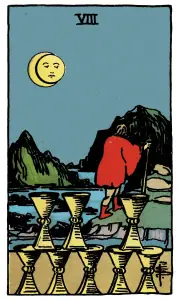 Eight of Cups
Usually no to continuing under the same terms; yes to a prepared departure when the central unmet need has been named and tested.
Not yet when fear, repeated returns, or lack of a transition plan prevents either staying or leaving from becoming a real decision.
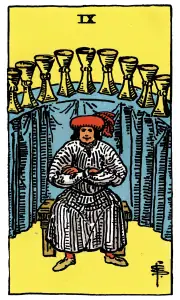 Nine of Cups
Generally yes when the question concerns enjoying an earned result or choosing an outcome that already aligns with known values.
Maybe after the desired outcome is separated from the deeper need it is expected to satisfy; more of the same may not answer the problem.
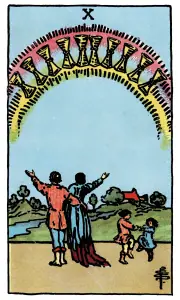 Ten of Cups
Usually yes when the decision supports a mutually defined home, relationship, or community and the daily conditions can sustain it.
No under the current arrangement when harmony depends on silence, exclusion, or an ideal that the involved people do not actually share.
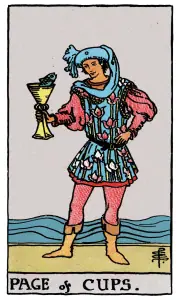 Page of Cups
A gentle yes to sending a sincere message, exploring a creative response, or allowing a low-pressure emotional beginning.
Not yet when fantasy, indirect communication, or poor emotional regulation makes the offer impossible for another person to answer clearly.
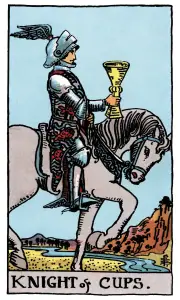 Knight of Cups
Yes when a sincere offer is supported by clear terms and leaves the recipient free to accept, revise, or decline.
No when charm, fantasy, or a mood-dependent promise substitutes for the action and accountability the question requires.
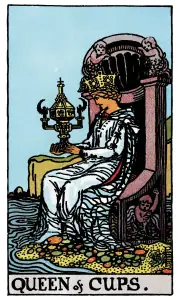 Queen of Cups
Maybe, leaning yes, when close listening and emotional boundaries provide enough clarity for a compassionate, consent-based response.
No for now when projection, depletion, secrecy, or blurred boundaries make it difficult to separate feeling from fact.
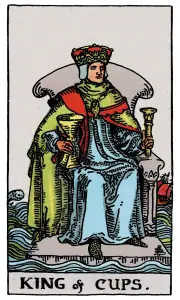 King of Cups
Yes when the decision is being made from regulated emotion, transparent values, and responsibility for its effect on other people.
No when suppression, manipulation, private volatility, or unequal power is hidden beneath a controlled and reassuring surface.
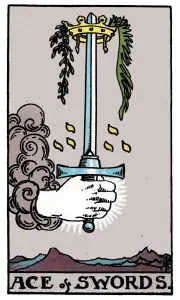 Ace of Swords
Yes when the relevant facts are available, the terms are precise, and the decision can be stated without hiding a material condition.
No for now when confusion, misinformation, poor wording, or unsupported certainty prevents a clean and informed choice.
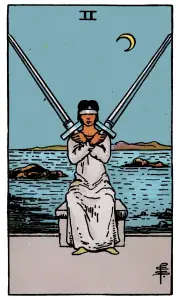 Two of Swords
Maybe; the choice remains balanced or protected because a deciding fact, conversation, or criterion has not yet been established.
A conditional answer is possible now, but it should follow a documented tradeoff rather than a rushed attempt to escape uncertainty.
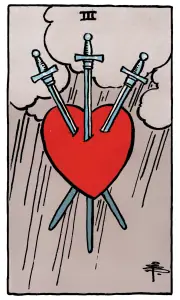 Three of Swords
Usually no under current conditions because a known hurt, separation, or painful truth materially changes the decision.
Maybe after the injury has been acknowledged and behavior has changed; healing alone does not prove that the prior arrangement should resume.
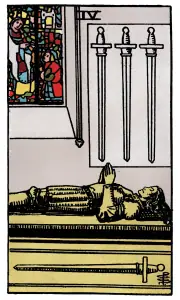 Four of Swords
Not now; the situation benefits from recovery and reduced input before another decision or conversation is attempted.
Maybe when capacity is visibly returning, but only through a gradual re-entry that does not recreate the original strain.
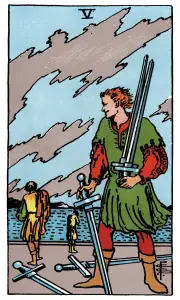 Five of Swords
Usually no when success depends on humiliation, hidden advantage, or a conflict method that destroys the relationship needed afterward.
Maybe after genuine accountability or a fair settlement changes the conditions; a quiet battlefield alone is not evidence of repair.
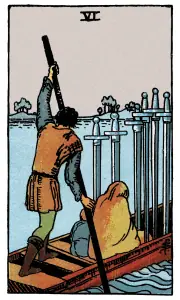 Six of Swords
Yes to a supported transition away from conflict when the route and immediate destination are practical, even if full relief takes time.
Not yet when logistics, repeated patterns, or unresolved obligations keep the proposed move from changing the actual condition.
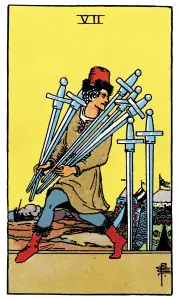 Seven of Swords
Maybe only if discretion is authorized and does not remove another person's informed choice; otherwise the hidden method is a no.
No until the relevant truth is disclosed, records are corrected, and accountability replaces the strategy of avoiding consequence.
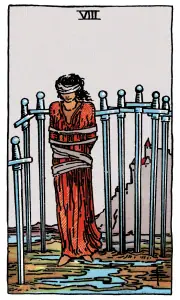 Eight of Swords
Usually no under current conditions because material restrictions, limited information, or fear of consequence makes free choice difficult.
Maybe, leaning yes, when a verified opening and adequate support restore real agency rather than only a more optimistic interpretation.
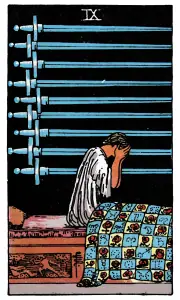 Nine of Swords
No decision should be treated as reliable while acute anxiety, lost sleep, or catastrophic thinking is preventing evidence from being weighed proportionately.
Maybe after support, rest, and verified information restore enough stability to decide; relief itself is not the same as evidence.
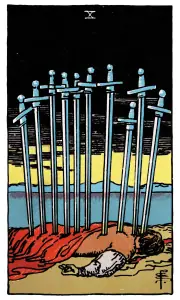 Ten of Swords
No; the current form has reached an ending or level of damage that makes continuation under the same assumptions irresponsible.
Yes to recovery or a genuinely restructured beginning, but no to reviving the same failed arrangement without material change.
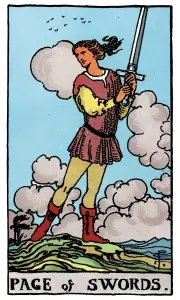 Page of Swords
Maybe, pending research; the card supports asking and verifying before treating an early signal as a settled answer.
No while rumor, surveillance, poor sourcing, or defensive communication is shaping the conclusion more than reliable evidence.
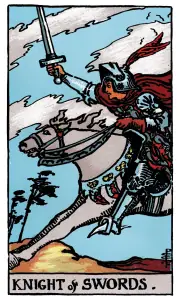 Knight of Swords
Yes when the facts are strong, time truly matters, and the action includes a route for correction and accountability.
No when aggression, scattered urgency, or the need to win is moving faster than evidence and consent.
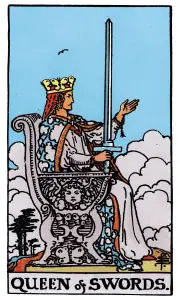 Queen of Swords
Yes when the evidence meets a clear standard and the choice preserves autonomy, transparency, and room for a factual response.
No when cynicism, personal bias, contempt, or fear of honest speech is determining the verdict before current evidence is heard.
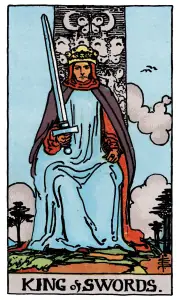 King of Swords
Yes when a transparent principle, sufficient evidence, and accountable authority all support the same conclusion.
No when logic is being used to conceal bias, domination, missing information, or refusal to accept review.
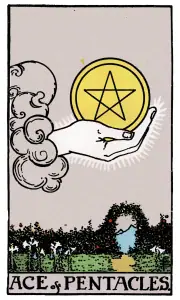 Ace of Pentacles
Yes when the opportunity is concrete, the terms are sound, and you can supply the steady effort needed after acceptance.
No for now when funding, timing, ownership, or practical follow-through is missing despite an attractive promise.
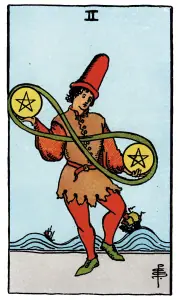 Two of Pentacles
Maybe, if the choice fits current capacity and you deliberately rebalance time, money, or attention to support it.
No for now when existing commitments are already colliding and the proposed choice adds load without removing anything.
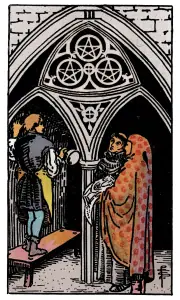 Three of Pentacles
Yes when the right skills, shared plan, and review process are present to turn the idea into competent work.
No until roles, standards, and respect for the people doing the work are repaired.
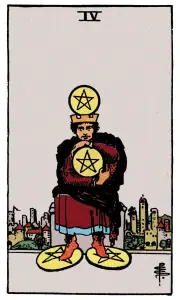 Four of Pentacles
Maybe: protect the essential resource or boundary, but do not say yes if the arrangement requires control over another person's choices.
No until you can tell whether releasing control is a planned use of resources or an unstable reaction to pressure.
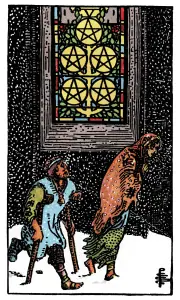 Five of Pentacles
No for now if the choice would deepen material strain, isolation, or health risk without a credible support plan.
Possibly yes when concrete assistance is available and the next step supports recovery rather than recreating the same exposure.
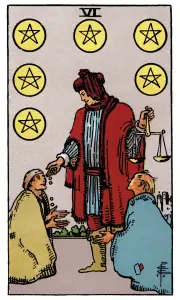 Six of Pentacles
Yes when the exchange is transparent, proportionate, and designed to increase rather than reduce the recipient's agency.
No when generosity carries hidden leverage, unfair criteria, or an obligation that cannot be freely refused.
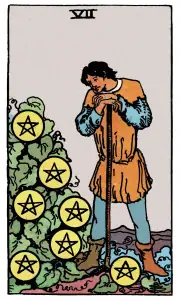 Seven of Pentacles
Maybe: continue when current evidence supports the process, but set a review point before adding substantially more time or money.
No until poor returns, impatience, or sunk-cost pressure has been separated through a clear assessment.
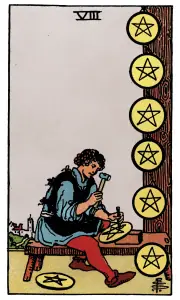 Eight of Pentacles
Yes when you are prepared to learn the method, accept specific feedback, and complete the repetitions the result requires.
No until careless execution, perfectionism, or practice without measurable improvement has been corrected.
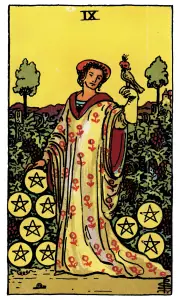 Nine of Pentacles
Yes when the choice respects your standards, preserves practical independence, and can be supported without destabilizing what you have built.
No when the decision is driven by status, financial dependence, or an image of success that the underlying resources cannot sustain.
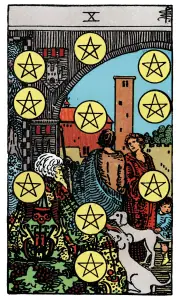 Ten of Pentacles
Yes when the choice strengthens a transparent, inclusive structure that can remain useful beyond the immediate participants.
No until hidden liabilities, family pressure, ownership disputes, or weak succession have been addressed.
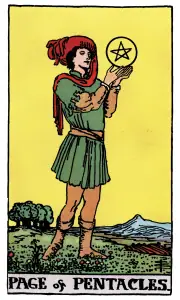 Page of Pentacles
Yes as a learning step when the cost is manageable, the terms can be checked, and you are ready to practice rather than only plan.
No for now when research is incomplete, follow-through is weak, or the opportunity depends on unrealistic beginner expectations.
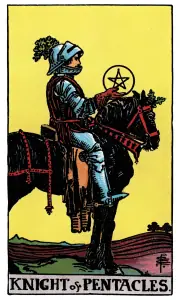 Knight of Pentacles
Yes when you can support the full commitment through a tested method and a sustainable pace.
No until stagnation, skipped obligations, or routine without attention has been corrected.
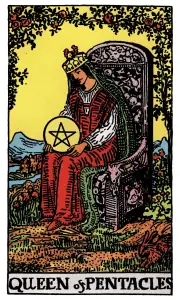 Queen of Pentacles
Yes when the choice creates sustainable support and respects the time, body, money, and consent of everyone providing care.
No when the plan depends on depletion, invisible labor, possessiveness, or material comfort used to avoid the real issue.
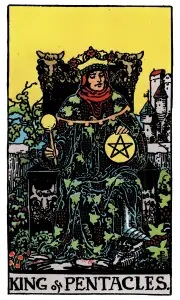 King of Pentacles
Yes when the plan is financially sound, operationally understood, and governed so authority remains accountable over time.
No when greed, coercive control, opaque records, or confidence unsupported by competent stewardship drives the choice.
No cards match those filters. Try a different name or reset a filter.
How TarotPro uses yes, no, and maybe
A yes card points toward support or workable conditions; a no card highlights resistance or a reason to stop; maybe indicates uncertainty, timing, missing information, or a condition that has not been met. Reversal can change the direction or add ambiguity because it changes how the same card theme is expressed.
In the yes or no tarot reading, one-card mode uses the selected card's fixed direction. The signed-in three-card mode uses Support, Resistance, and Key Insight: yes adds one, no subtracts one, and maybe is neutral. In both modes, the fixed rule decides the displayed answer; AI explains the cards and cannot override it.