Direct expression
Upright
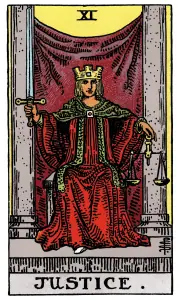
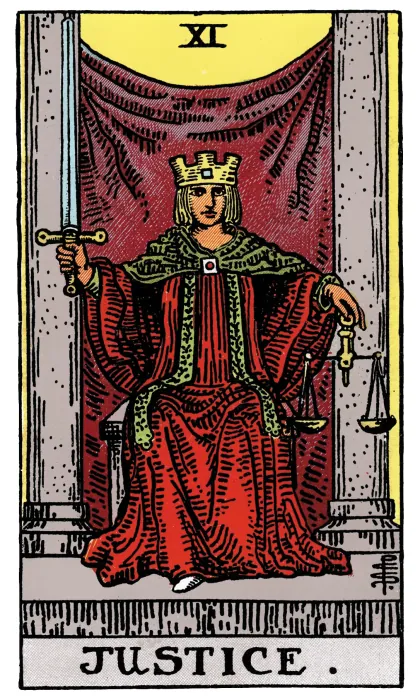
Justice asks whether a choice can withstand scrutiny. Facts matter, but so do the rule being used, the interests it serves, and the consequence that follows.
Upright, Justice asks for a decision that can be explained without changing the standard halfway through. Relevant facts, prior agreements, and foreseeable consequences all belong in the assessment. The card is especially useful when personal preference is quietly being presented as a neutral rule.
Accountability here is not limited to blame. It can mean correcting an error, honoring a contract, acknowledging the benefit one received, or accepting an outcome produced by a fair process. The aim is a proportionate response, not punishment for its own sake.
Practical adviceName the rule before choosing the winner, then check that it does not change for convenience.