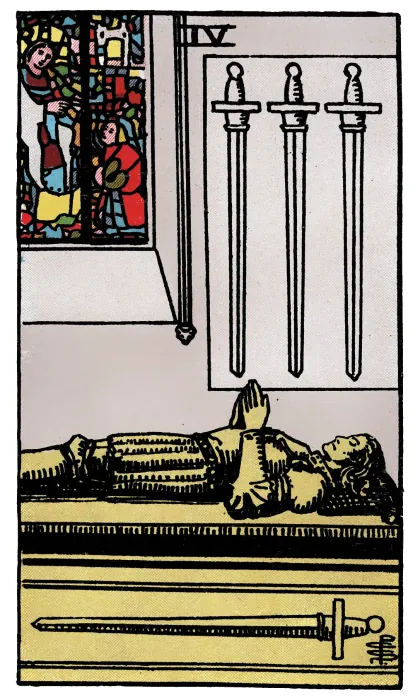
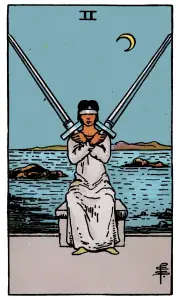
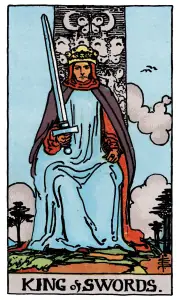
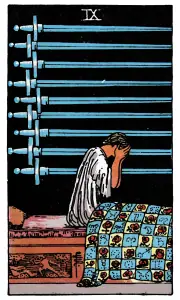
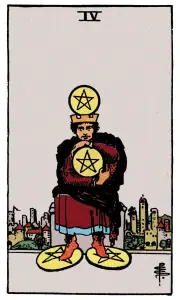
The Four of Swords is deliberate recovery after strain. Rest protects judgment, memory, and the ability to return, so the pause should be treated as part of the work rather than an absence of effort.
Fours contain a suit's activity. Swords becomes the choice to stop analysis, argument, and incoming information long enough for the mind and body to integrate what happened. A pause is productive when demands are genuinely reduced rather than merely moved to a screen.
Preparation makes rest safer. Communicate absence, preserve the record, and decide which event will trigger return. Those steps prevent recovery from being consumed by fear that everything will collapse unattended.
Practical adviceProtect a bounded period of real rest and remove the input that keeps the conflict active.
↓ Blocked or redirected
Reversed
Reversed, rest is interrupted, resisted, or beginning to end. A person may return too early, remain withdrawn beyond usefulness, or discover that inactivity has not produced recovery.
Reversal can signal restless exhaustion: the person is inactive but not recovering because rumination and vigilance continue. More time in the same conditions may not help. Change the environment, input, or support structure rather than judging the inability to relax.
The card can also indicate reawakening. Attention and appetite begin to return, but capacity may still be uneven. Choose a low-risk task and leave margin instead of treating one good day as proof that the prior workload is sustainable.
Practical adviceMeasure whether the pause restored capacity; if not, change the conditions rather than simply extending or ending it.