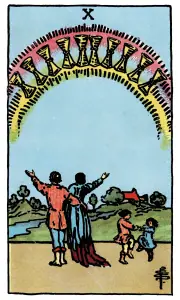
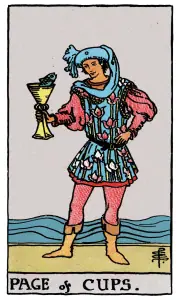
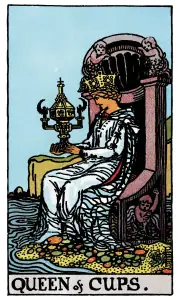
What Cups describe
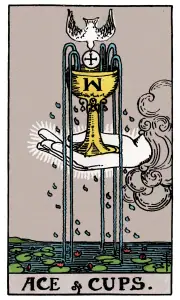
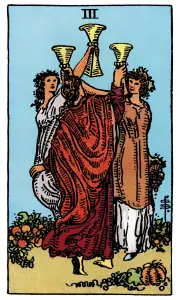
Cups often concern feelings, relationships, intuition, belonging, and the stories people build around emotional experience. They can show genuine connection, but they can also expose projection, avoidance, nostalgia, or choices based on an imagined future.
Do not use a Cups card to claim access to another person's private mind. In relationship questions, anchor the interpretation in stated words, observable behavior, consent, and your own emotional needs. The cards can frame a conversation; they cannot replace one.
Read emotion as information, not proof
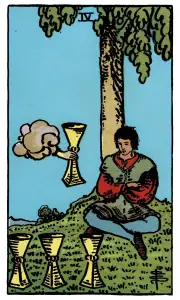
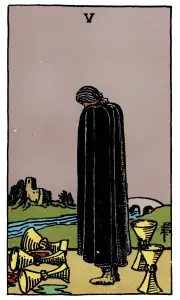
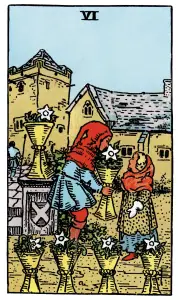
Follow how a Cups card handles exchange. The Two emphasizes reciprocity, the Four can turn inward or disengage, the Five focuses on loss, and the Six revisits memory. A positive image can still require boundaries, while a difficult image can identify grief that needs acknowledgment rather than immediate correction.
Court cards distinguish emotional approaches: curiosity, pursuit, containment, and mature stewardship. Reversed, those approaches may become inconsistent, idealized, withdrawn, or overcontrolled. Use the orientation to refine the behavior, not to assign a fixed personality label.